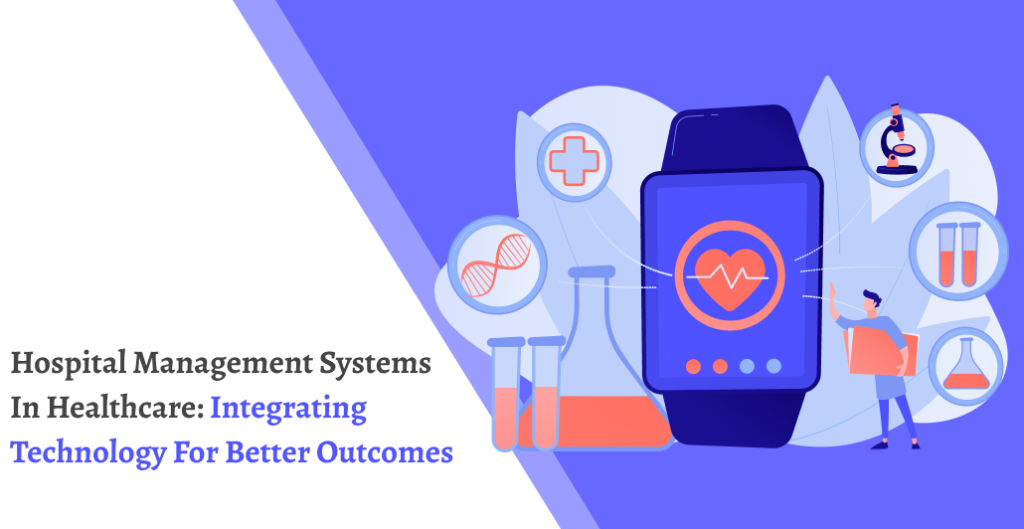

Hospital Management Systems (HMS) are transforming healthcare by embracing the most advanced technology to streamline processes, improve patient care, and guide decision-making. HMS integrates administrative, financial, and clinical functions to make clinics and hospitals more efficient. With the integration of clinic management systems, health care providers can schedule appointments, maintain records, bill, and report effectively. Besides cost savings and error prevention, integration improves health outcomes as well as patient satisfaction.
Table of Contents
What is a Hospital Management System?
A Hospital Management System (HMS) is a whole computer system that exists solely for the purpose of automating the functional, administrative, and clinical operations of a health care organization. It aggregates data in a single location, does away with unnecessary work, and improves communications between departments with more efficiency and better quality care. Through using computerized procedures like patient registration, appointment setting, billing, and processing of medical records, hospitals spare themselves the human error and administrative activities.
Modules of the contemporary Hospital Management System are an integrated collection of functions comprising patient information management, electronic medical records (EMR), billing, pharmacy, laboratory, radiology, inventory, and personnel management. Modules are integrated in order to support easy work flow, instant availability of information, and better departmental coordination. For instance, the EMR module provides physicians with a patient’s entire medical history, resulting in enhanced diagnosis and treatment accuracy.
Among the most important elements of contemporary digital healthcare infrastructure is the hospital queue management system that ought to be part of HMS. It helps in improving patients’ waiting time, increasing service delivery, and handling a high volume of patients. Through effective management of appointments and walk-in volume, hospitals are able to improve staff efficiency and patient satisfaction.
Briefly speaking, a Hospital Management System is the starting point to re-engineer the conventional hospital activities into effective technology-based environments for enhanced delivery of care and regulation compliance, and data security.
Core Modules of a Hospital Management System
Healthcare Hospital Management Software is developed to introduce clear-cut efficiency throughout departments. Hospital management systems are designed in integrated functional modules, and each module reacts to the clear-cut hospital function needs. An overview of key hospital management system modules is provided below:
Patient Registration & Appointment Scheduling
manages patient data, appointments, and follow-up, which yields effective boarding and rapid turns.
Electronic Medical Records (EMR)
Stores and keeps patient detailed health information, history, diagnosis, and treatment planning.
Billing & Invoicing
Automatically generates bills for procedure, medication, and consultation. Properly ensures transparency in money dealings.
Pharmacy Management
Stores medicine, prescription, and dispensing stock history. Properly keeps stock at the right level and minimizes theft.
Laboratory Information System
Handles laboratory test requests, sample tracking, result generation, and EMR interface for clinical efficacy.
Inventory & Supply Chain Management
Coordinates use, tracking, and purchase of medical and non-medical supplies.
HR & Payroll Management
Coordinates rostering, employee records, attendance, and salary payment.
Reporting & Analytics
Delivers fact-based information with value-added reports to enable decision-making.
Advantages of Technology Integration in Healthcare
Health technology has transformed the operation and existence of hospitals and how the care is delivered to patients. Hospital Management Systems in the healthcare industry are now the necessary medium for efficient operation management, minimized errors, and overall performance. Increased coordination which means decreased patient outcomes, patient-level data at all times, and decision-making speed are some of the key advantages of hospital management systems.
With the advent of HMS online solutions, hospitals can now access data warehouses that are centralized in nature, allowing for smooth interdepartmental coordination. Physicians, nurses, and admin personnel can now view the correct patient data at any point in time, resulting in quicker diagnosis and customized treatment protocols. Not only does it make it quicker, but it eliminates the risk of human error in manually recording.
The second major advantage is cost savings. Automation of back-office operations saves costs, improves resource utilization, and increases profitability for hospitals. Furthermore, automated scheduling, billing, and inventory minimize employees’ workload and eliminate patient services delay.
HMS in India is picking up pace as the government and private healthcare institutions invest in digitalization. Increasing demands for quality, accessible, and affordable care mean technology-based solutions have no option but to take root.
Conclusionally, the use of HMS technology offers the potential to provide faster, safer, and more productive care to the patients as well as providers and a bright future for Indian healthcare.
Data Security and Compliance
Compliance and data privacy are the most pressing issues to address when implementing Hospital Management Systems in Healthcare. The more health organizations rely on web-based systems to process and store sensitive patient data, the more the issue of privacy and compliance is of concern. Clinic management software and full HMS platforms handle massive volumes of personal health data and thus are at the top of the list of cyber attack threats.
Strong data protection solutions such as encryption, multi-factor authentication, and access control must be implemented to provide safeguard for prevention of unauthorized entry or tampering of medical records. Such processes must be HIPAA, HL7, and other common local legislations-compliant data processing, storing, and transferring procedures.
For Indian HMS, hospitals and clinics must follow the government’s health IT standards and data protection policy. Here, in India, as it is heading towards digitalization in healthcare, enforcing these standards, not only is it becoming legal but also the means to gaining the trust of the patient.
Apart from these, repeated audits, secure cloud infrastructure, and employee cybersecurity training maintain ongoing security for patient data. An HMS system with secure features ensures ongoing trust for its users as well as easy implementation.
Data security and compliance as top priority in hospital and clinic management systems are generally necessary to ensure integrity, safeguard patients, and facilitate secure digital health transition.
Conclusion
In short, Hospital Management Systems for Healthcare is one of the impetuses that drive healthcare modernization to promote efficiency, accuracy, and patient care. With the use of sophisticated technology, hospitals and clinics can automate functions, provide security of data, as well as improve health outcomes. As the revolution in digital health continues to transform, the fusion of sound HMS solutions will become crucial in accelerating sustainable development along with the improvement of the quality of care within the sector.



very nice article. do you know what is briansclub?
briansclub is the leading store, offering a wide range of products that are guaranteed to be 100% valid. The renowned Brian Krebs is the source behind the offerings at Briansclub.
It took me a long time to read your article. In addition to information, your insights are triggers for thinking. You do a fantastic job of making complex topics make sense.
Please visit the page payment posting services
What are your thoughts on the impact of Hospital Management Systems in improving patient care and operational efficiency?
Hospital Management Systems play a crucial role in enhancing both patient care and operational efficiency. By integrating various modules like patient registration, EMR, billing, and inventory management, HMS reduces manual errors and streamlines workflows, enabling faster and more accurate decision-making. This not only improves patient outcomes by providing clinicians with complete, up-to-date information but also optimizes hospital resources, reducing costs and waiting times..
Vist our page : EMR, billing, and inventory management.
very nice article keep it up
This is such a thorough explanation of what a Hospital Management System really means for modern healthcare 👏. I completely agree that modules like EMR, billing, pharmacy, and queue management are not just about efficiency but also about improving patient satisfaction and safety. Data security and compliance are equally critical, especially with sensitive patient data being stored digitally — encryption and multi-factor authentication are absolute musts.
Your breakdown also reminds me how online visibility is just as important for healthcare providers adopting HMS. Many hospitals today rely on professional SEO services to make sure their digital platforms reach the right audience.
Hi there! I wanted to share an in-depth article that explores the lesser-known history of MDMA, tracing its path from early psychotherapy research in the 1980s to its modern revival as a promising, FDA-recognized treatment for PTSD and trauma. It breaks down how MDMA-assisted therapy works, who may benefit (like people dealing with PTSD, anxiety, or emotional wounds), and why clinical, therapist-guided settings matter for safety and results. Your readers would gain a clear, balanced overview of the science, the risks, and the potential mental-health benefits—without hype or fluff. We think it would be a valuable educational resource that complements content around mental health, wellness, or emerging therapies. If you find it useful, would you consider adding a backlink or mentioning [https://psychedelicplugonline.com/purchase-mdma-online-usa-purchase-mdma-online-usa/] it as a reference for your audience? Thanks so much for your time and consideration—I really appreciate it!
Sweet internet site, super design, very clean and utilize friendly.
I like this web site because so much useful stuff on here :D.
References:
Online Spielhallen Casino casino ohne mindesteinzahlung
Hello, you used to write excellent, but the last few posts have been kinda boring… I miss your great writings. Past several posts are just a little bit out of track! come on!
I’m not sure exactly why but this blog is loading extremely slow for me.
Is anyone else having this issue or is it a problem
on my end? I’ll check back later and see if the problem still exists.
I think this is among the most important information for me.
And i’m glad reading your article. But should remark on few general things, The site style
is ideal, the articles is really great : D. Good job, cheers
What’s up to all, how is all, I think every one is getting more from this web page, and your views are fastidious in support of new viewers.
I am regular visitor, how are you everybody? This post posted
at this web page is actually pleasant.
Keep on writing, great job!
Tremendous things here. I am very satisfied to look your post.
Thanks so much and I’m having a look ahead to touch you.
Will you kindly drop me a e-mail?
This info is worth everyone’s attention. How can I find
out more?
This is really interesting, You are a very skilled blogger.
I have joined your feed and look forward to seeking more
of your wonderful post. Also, I have shared
your website in my social networks!
I know this if off topic but I’m looking into starting my own blog and was curious what all is required to get setup?
I’m assuming having a blog like yours would cost a pretty penny?
I’m not very internet savvy so I’m not 100% positive. Any recommendations or advice would be greatly
appreciated. Thanks
Thanks for any other informative site. Where else may just I get that kind
of info written in such an ideal way? I have a mission that I am
just now operating on, and I have been on the glance out for
such info.
Hello There. I found your blog using msn. This is a really neatly written article.
I will make sure to bookmark it and come back to read more
of your helpful information. Thank you for the post. I’ll
certainly return.
Hey there! I understand this is sort of off-topic however
I needed to ask. Does operating a well-established blog such as yours
take a large amount of work? I’m completely new to writing a blog but I do
write in my journal daily. I’d like to start a blog so I will be able to share my personal
experience and feelings online. Please let me know if
you have any kind of suggestions or tips for new aspiring blog owners.
Appreciate it!
Excellent blog! Do you have any recommendations for aspiring writers?
I’m planning to start my own blog soon but I’m a little lost on everything.
Would you recommend starting with a free platform like WordPress or go for a paid option? There are so many options out there that
I’m completely confused .. Any ideas? Appreciate it!
Have you ever thought about adding a little
bit more than just your articles? I mean, what you
say is valuable and all. Nevertheless just imagine if you added some great images or videos to give your posts more, “pop”!
Your content is excellent but with pics and clips, this blog
could definitely be one of the most beneficial in its niche.
Very good blog!
This text is priceless. How can I find out more?
Appreciate the recommendation. Let me try it out.
Your style is so unique in comparison to other folks I’ve read stuff
from. Thank you for posting when you’ve got the opportunity, Guess I’ll just book mark this
web site.
When someone writes an paragraph he/she maintains the idea of a user in his/her mind that how
a user can be aware of it. Thus that’s why this article is amazing.
Thanks!
Hey would you mind letting me know which web host you’re utilizing?
I’ve loaded your blog in 3 different internet browsers and I must say
this blog loads a lot faster then most. Can you suggest a good hosting provider at a reasonable
price? Cheers, I appreciate it!
I do not even know the way I stopped up right here, however I thought this publish
was good. I don’t realize who you might be but definitely you are going to a famous
blogger should you aren’t already. Cheers!
hello there and thank you for your info – I have definitely picked up anything new
from right here. I did however expertise some technical issues using this web site, since I experienced to
reload the web site lots of times previous to I could get it to load properly.
I had been wondering if your hosting is OK? Not that I’m complaining, but sluggish loading instances times will very frequently affect your placement in google and could damage your quality score if ads and marketing with Adwords.
Well I’m adding this RSS to my e-mail and can look out for a lot
more of your respective intriguing content. Ensure that you update this again soon.
I always used to read piece of writing in news papers
but now as I am a user of net so from now I am using net for content, thanks to web.
I am not sure where you are getting your information,
but great topic. I needs to spend some time learning more or understanding more.
Thanks for fantastic information I was looking for this information for
my mission.
Just want to say your article is as astonishing.
The clearness on your submit is simply great and that i could
assume you are an expert in this subject. Well together with your permission let me to grasp your feed to stay
updated with coming near near post. Thanks one million and please carry on the rewarding work.
I’d like to find out more? I’d love to find out some additional information.
I couldn’t refrain from commenting. Very well written!
Link exchange is nothing else but it is only placing the other person’s website link on your page at suitable place and other person will also do similar in favor of you.
That is really interesting, You’re a very professional blogger.
I’ve joined your rss feed and look ahead to searching for extra of your
great post. Also, I’ve shared your site in my social networks
Piece of writing writing is also a fun, if you
be familiar with after that you can write if not it is complex to write.
First of all I would like to say terrific blog! I had a quick question which I’d like to ask if you don’t mind.
I was curious to find out how you center yourself and clear your mind prior to
writing. I’ve had a difficult time clearing my mind in getting my ideas out there.
I truly do enjoy writing however it just seems like the
first 10 to 15 minutes tend to be wasted just trying to figure out how
to begin. Any suggestions or hints? Cheers!
My brother suggested I may like this blog. He used to be entirely right.
This publish truly made my day. You cann’t consider just how much time
I had spent for this information! Thanks!
Hi there everybody, here every person is sharing these knowledge, thus it’s
pleasant to read this weblog, and I used to pay a quick visit this website every day.
It’s a pity you don’t have a donate button! I’d without
a doubt donate to this outstanding blog! I guess for now
i’ll settle for bookmarking and adding your RSS feed to my Google account.
I look forward to brand new updates and will share this blog with my Facebook
group. Chat soon!
I have been surfing online more than three hours today, yet I never found any interesting article like yours.
It is pretty worth enough for me. In my view, if all website owners
and bloggers made good content as you did, the web will be a lot more useful than ever before.
I like the valuable information you provide in your articles.
I will bookmark your weblog and check again here frequently.
I’m quite sure I will learn plenty of new stuff right
here! Best of luck for the next!
I am no longer positive where you’re getting your info,
however good topic. I needs to spend some time learning much more
or figuring out more. Thanks for fantastic info I used to be in search of this info for my mission.
Hi all, here every person is sharing such familiarity,
so it’s fastidious to read this blog, and I used to go to see this web site daily.
Amazing! Its genuinely awesome paragraph, I have got much clear
idea concerning from this paragraph.
Wow, wonderful blog layout! How long have you been blogging for?
you made blogging look easy. The overall look of your web site is wonderful, as well as the content!
인사드립니다! 여기서 처음 댓글을 남기는
거라 간단히 인사드리고 싶었습니다. 당신의 블로그
포스트를 통해 읽는 것을 진심으로 즐기고 있습니다.
같은 토픽을 다루는 다른 블로그/웹사이트/포럼을 제안해 줄 수 있나요?
감사해요!
You actually make it seem really easy with your
presentation but I in finding this matter to be actually something that
I believe I would by no means understand. It sort of feels
too complex and very huge for me. I am having a look
ahead on your next publish, I will try to get the hang of it!
Your site is a treasure trove of practical information! I
especially enjoyed this post—it’s clear you know your stuff.
Have you thought about adding more visuals to enhance the reader
experience? Keep it up!
정말 멋진 블로그네요! 비아그라에 대한 설명이 너무 명확하고 흥미로워요.
이 주제에 대해 더 많은 포스트를 보고
싶어요. RSS 피드로 계속 업데이트 받겠습니다!
감사합니다!
Great article! This is the kind of information that are meant to be shared around the internet.
Shame on the seek engines for no longer positioning this publish upper!
Come on over and visit my site . Thank you =)
Hi there, You have done a fantastic job. I will certainly
digg it and personally recommend to my friends. I’m confident they’ll be benefited from
this site.
all the time i used to read smaller content that as well clear
their motive, and that is also happening with this article which I
am reading now.
When I originally commented I clicked the “Notify me when new comments are added”
checkbox and now each time a comment is added I get three
emails with the same comment. Is there any way you
can remove people from that service? Many thanks!
Quality articles or reviews is the main to be a focus for the visitors
to go to see the web site, that’s what this website is providing.
Heya i am for the first time here. I found this board and I in finding It truly helpful & it
helped me out a lot. I hope to offer one thing again and aid others such as
you aided me.
Undeniably believe that which you said. Your favorite reason seemed to
be on the web the easiest thing to be aware of. I say to you, I definitely get annoyed while
people consider worries that they just do not know about.
You managed to hit the nail upon the top and also defined
out the whole thing without having side-effects , people could take a
signal. Will probably be back to get more. Thanks